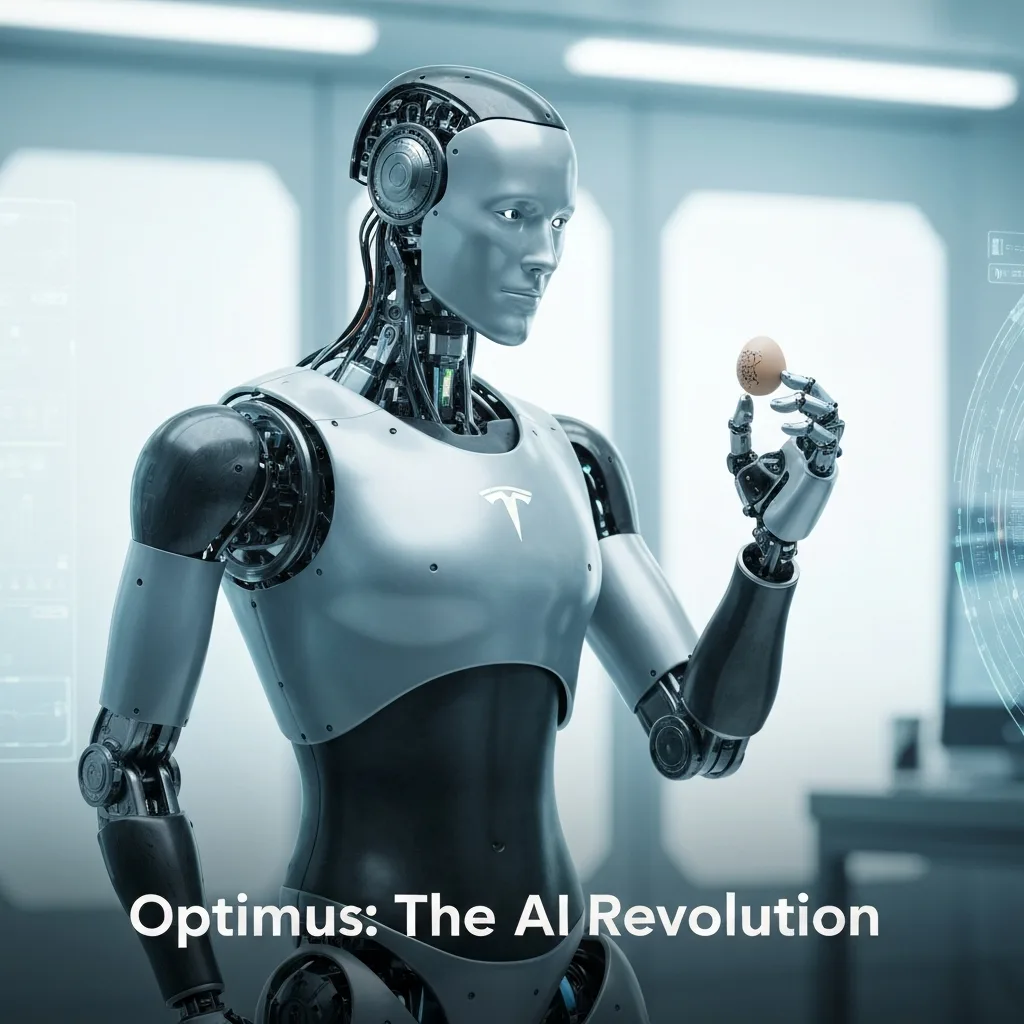
The Tesla Optimus bot has captured the world's imagination, sparking both excitement for a future of automated assistance and significant skepticism about its true capabilities. Videos of the robot folding laundry or performing yoga poses are often met with questions: Is it real? Is it just remote-controlled? Can it truly think for itself? While competitors showcase impressive acrobatics, their approach often relies on pre-programmed routines. The key to understanding Optimus lies in a radically different philosophy. This guide directly addresses the skepticism by demystifying Tesla's unique end-to-end AI, which learns from real-world data just like a human. We will explore the strategic rationale behind its design, transparently examine its current limitations, and present a data-backed roadmap for its evolution into a truly autonomous, general-purpose robot. It's time to separate the hype from the hardware and understand how Optimus is being engineered to change our world.
Demystifying Optimus: Autonomy, Skepticism, and Reality
To grasp the potential of Optimus, one must first look past the polished demos and address the core questions of its real-world viability. The public discourse is filled with valid skepticism, and understanding Tesla's approach requires a shift in perspective from traditional robotics to AI-driven learning.
The Truth About Tesla Optimus's Real Capabilities
So, what can Optimus actually do? The Tesla Optimus real capabilities currently demonstrated include tasks like sorting objects, folding laundry, walking in controlled environments, and performing delicate operations like handling eggs. While these may seem simple, the crucial distinction is how it performs them. According to Brian D. Colwell, Tesla's Optimus robot leverages an end-to-end neural network architecture for both perception and decision-making, adapted from the company's Full Self-Driving (FSD) technology. The current level of Optimus robot autonomy is focused on mastering these foundational tasks to gather vast amounts of data. The answer to "Is Tesla Optimus real?" is unequivocally yes, but it's a platform in constant development, where the rate of learning is more important than the complexity of its current skills.
How Optimus Stacks Up: Tesla vs. Boston Dynamics Atlas
| Feature | Tesla Optimus | Boston Dynamics Atlas |
|---|---|---|
| Core Philosophy | AI-First: Focuses on general intelligence and learning from data to adapt to new situations. | Mechanics-First: Focuses on advanced mechanical engineering and executing pre-programmed routines. |
| Primary Strength | Scalable learning and potential for general-purpose autonomy in unstructured environments. | Incredible agility, balance, and acrobatic capabilities in controlled demonstrations. |
| Learning Method | Utilizes an end-to-end neural network, learning from vast video datasets (similar to FSD). | Relies on pre-programmed choreography and control algorithms for specific actions. |
| End Goal | A mass-produced, generalist apprentice designed to perform a wide range of human tasks. | A specialized athlete and research platform demonstrating the limits of dynamic locomotion. |
Addressing the Skepticism: Is Optimus Just Teleoperation?
A primary source of Optimus robot skepticism revolves around the use of teleoperation. Critics rightly point out that many demos involve a human operator controlling the robot remotely. However, this misunderstands the strategy. Optimus teleoperation is not the end goal; it's a critical data-collection tool. By having humans perform tasks, Tesla's engineers are training the robot's neural network on real-world physics and human-like movements. This "shadow mode" approach feeds the AI system the necessary data to eventually perform these tasks autonomously. This data, collected from countless hours of human-guided actions, is carefully anonymized and utilized to create a robust dataset for the AI. It's a temporary bridge used to build a truly independent intelligence.
The Engineering Behind the Autonomy: A Technical Deep Dive
Optimus's path to autonomy isn't based on brute-force programming but on a sophisticated synergy of software, hardware, and a relentless cycle of improvement.
The Brains of the Bot: Inside the Tesla Optimus AI System
The heart of the robot is the Tesla Optimus AI system. It runs on a single, end-to-end Optimus neural network that takes in raw video data from its cameras and outputs joint controls, a design philosophy detailed in various Tesla AI Day presentations and technical briefs. This is the same core philosophy behind Tesla's Full Self-Driving (FSD) technology. Instead of being programmed with millions of lines of "if-then" code, the system learns by watching. How Optimus learns is by processing immense datasets of video, both from human-operated robots and from the real-world driving data of Tesla vehicles. This methodology hinges on the effective collection and anonymization of vast visual data streams to ensure the AI learns from a diverse and comprehensive set of real-world scenarios. This allows the optimus ai to build an implicit understanding of physics, object properties, and human intent, enabling it to navigate and manipulate objects in unstructured environments.
Built for the Real World: Optimus Hardware and Sensor Specifications
Unlike research robots built with expensive, custom parts, Optimus is designed for mass production. The Optimus hardware specifications feature Tesla-designed actuators, custom gearboxes, and a streamlined sensor suite. The primary Optimus sensor technology relies on vision, using cameras to perceive the world just as humans do. This approach is not only cost-effective but also forces the AI to solve problems with the same inputs a human would have, leading to a more robust and generalizable intelligence. The hardware is built to serve the AI, providing the dexterity and feedback necessary for the neural network to learn and execute complex tasks.
From Gen 1 to Gen 3: Charting Optimus's Rapid Evolution
| Generation | Key Improvements & Milestones |
|---|---|
| Prototype (2022) | Initial public reveal, demonstrating basic walking and waving capabilities as a proof of concept. |
| Gen 1 | A more refined version with improved stability and the ability to perform simple tasks in a factory setting. |
| Gen 2 (Late 2023) |
|
| Gen 3 (Expected) | Projected to feature further advancements in dexterity, speed, and onboard AI autonomy. |
The Vision: Optimus, Society, and the Age of Abundance
Optimus is more than an engineering project; it's a cornerstone of a future vision that seeks to fundamentally reshape the global economy and human labor.
More Than a Machine: Elon Musk's Vision for Optimus
The Elon Musk Optimus vision extends far beyond a simple factory robot. Elon Musk, as reported by Yahoo Finance, predicts that the rise of AI and robots like Optimus will lead to an "age of abundance" where goods and services are plentiful and inexpensive, potentially necessitating a universal "high" income. This ambition is a driving force behind many of his latest inventions and startups, which aim to solve humanity's most pressing challenges.
Beyond the Factory: The Future of the Optimus Robot in Society
What is the future of the Optimus robot? Initially, Tesla robot applications will focus on manufacturing and logistics within Tesla's own factories. However, the long-term Optimus robot societal impact could be profound. Potential applications range from elder care and disaster response to household chores and companionship. Musk has spoken of an "Optimus age of abundance," where the cost of physical labor drops so dramatically that it transforms society, potentially leading to concepts like universal basic income becoming not just viable, but necessary.
From Prototype to Product: The Optimus Production Timeline
While a precise Optimus production timeline remains fluid, Elon Musk has indicated that the robot could be ready for external sale within 3-5 years. The initial focus is on deploying thousands of units within Tesla's own manufacturing plants to refine their capabilities and prove their economic value. This real-world testing ground is crucial for hardening the hardware and software before a wider commercial release. The goal is to produce millions of units, making them as ubiquitous as cars.
About the Author
Hussam Muhammad Kazim is an AI Automation Engineer with a keen interest in the intersection of robotics and artificial intelligence. With 3 months of hands-on experience in the field, he brings a fresh and practical perspective to the rapid advancements being made by companies like Tesla.
Frequently Asked Questions
Is the Tesla Optimus robot real?
Yes, the Tesla Optimus robot is real. It is an active research and development project with multiple generations of functional prototypes demonstrated publicly. While it is not yet a commercial product, it is being actively tested and improved within Tesla's facilities.
What is the Tesla Optimus AI system?
The Tesla Optimus AI system is an end-to-end neural network that processes video data from the robot's cameras to generate real-time actions. It is based on the same AI principles as Tesla's Full Self-Driving (FSD) software, learning from vast amounts of real-world data rather than being explicitly programmed for every task.
How does Optimus learn new tasks?
Optimus learns primarily by watching. It analyzes video data from two main sources: 1) Humans performing tasks while remotely operating the robot (teleoperation), and 2) Real-world video data from Tesla's fleet of vehicles. This allows its neural network to build a foundational understanding of physics and human actions, which it can then apply to new, unseen tasks.
What is Elon Musk's vision for Optimus?
Elon Musk's vision for Optimus is to create a general-purpose humanoid robot that can perform virtually any task a human can. The ultimate goal is to address labor shortages, eliminate dangerous and repetitive jobs, and usher in an "age of abundance" where the cost of labor falls dramatically, fundamentally transforming the global economy.